
Futures Position Sizing: Margin vs Notional (Simple Explanation)
Learn futures position sizing the right way. Understand margin vs notional, how leverage affects liquidation, and how to keep risk fixed per trade.
Many traders think margin equals risk. It does not. Risk comes from notional exposure and price movement.
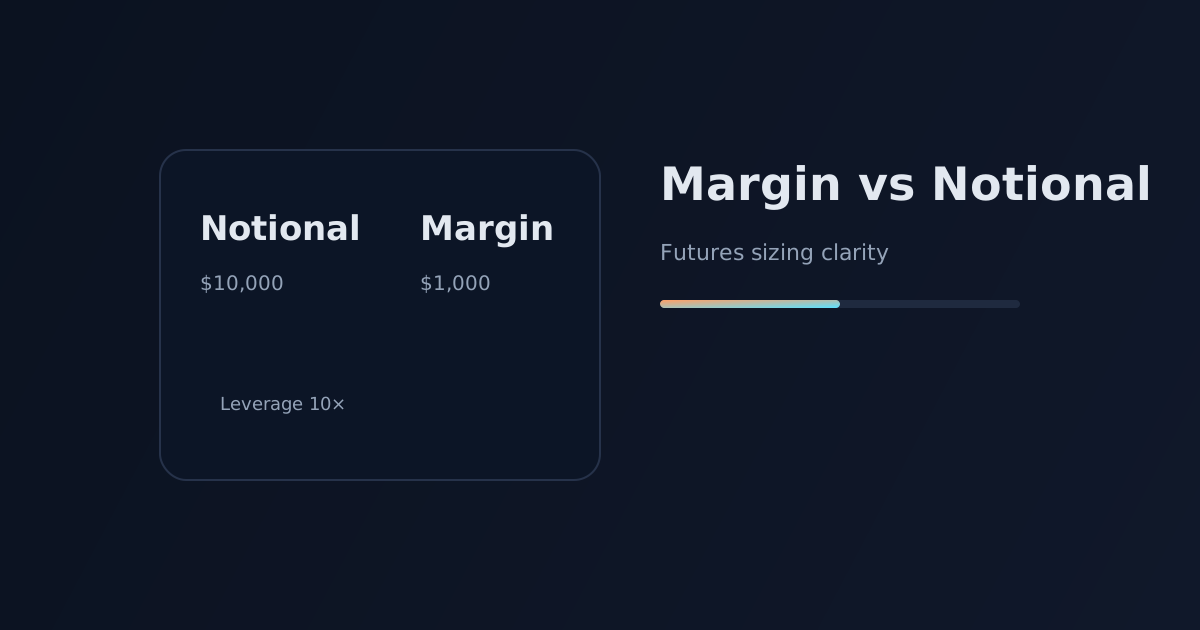
Definitions you must know
- Notional: contracts or units times price.
- Margin: collateral required to open and keep the position.
- Leverage: notional divided by margin (simplified).
Why this matters
A 2% move against a $10,000 notional position is roughly a $200 loss, regardless of margin used.
Correct futures sizing in four steps
1. Set account risk (e.g., 1% = $100). 2. Define stop distance. 3. Compute size so stop loss equals risk. 4. Choose leverage to fit margin usage.
Use:
Liquidation is a different problem
Stops control planned loss. Liquidation happens when margin is insufficient before the stop executes. Keep liquidation comfortably beyond the stop.