
Risk/Reward Ratio (R:R) in Trading: How to Calculate It (+ Common Mistakes)
Understand risk/reward ratio with clear formulas and examples for long/short trades. Avoid the most common R:R mistakes and improve consistency.
Risk/reward ratio shows how much you aim to make compared with how much you risk losing. It is a quality filter that keeps you focused on trades with asymmetric payoff.
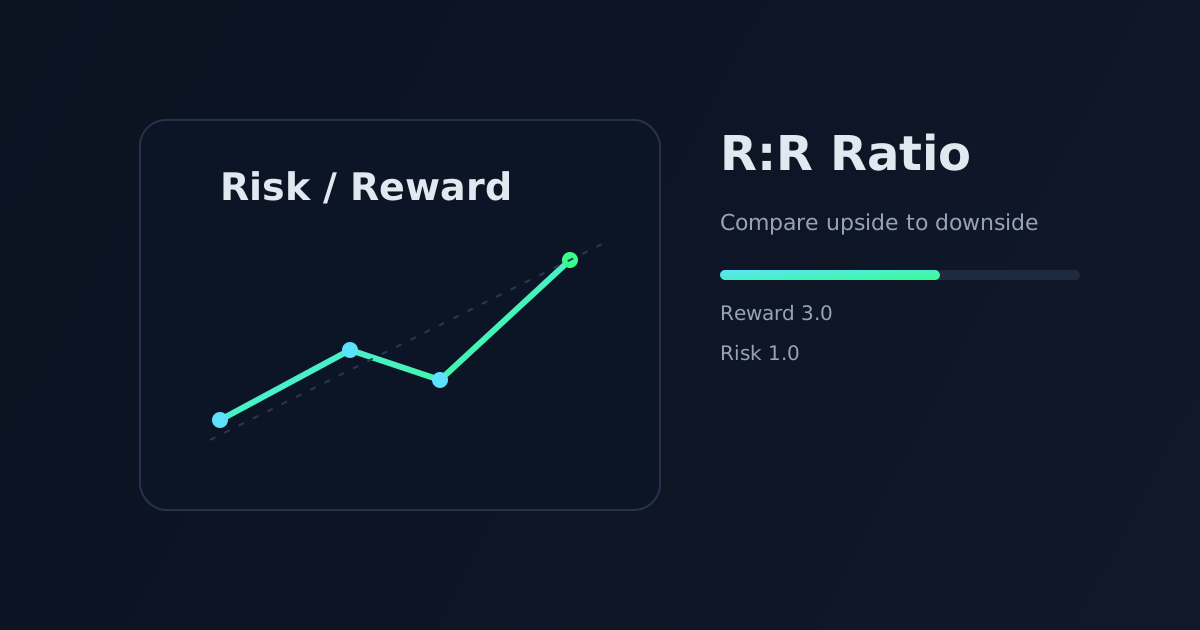
The formula in one line
R:R = Reward / Risk
Reward is the distance from entry to target. Risk is the distance from entry to stop. The ratio tells you the payoff profile before you place the trade.
Long vs short calculations
For long trades:
- Risk = Entry - Stop
- Reward = Target - Entry
For short trades:
- Risk = Stop - Entry
- Reward = Entry - Target
Use absolute values to avoid sign errors.
What is a good ratio?
There is no universal number. It depends on your win rate and strategy style. Rough ranges:
- Trend trading: 1.5 to 3.0+
- Mean reversion: 1.0 to 2.0 with higher win rates
- Scalping: can be lower but requires excellent execution
The most common mistakes
- Moving stops just to improve the ratio.
- Picking targets that ignore structure.
- Ignoring fees and slippage.
- Chasing big ratios with a low win rate.
Expectancy matters more
A system can be profitable with a modest ratio if the win rate is strong. Think in expectancy: EV = (Win rate x Avg win) - (Loss rate x Avg loss)