
Trading Drawdowns: What They Really Mean + Recovery Math (Avoid the Death Spiral)
Learn how trading drawdowns work, why recovery is nonlinear, and how to reduce drawdowns with practical rules. Includes recovery examples.
Drawdowns are normal. The danger is allowing them to grow so large that recovery becomes mathematically brutal and psychologically destabilizing.
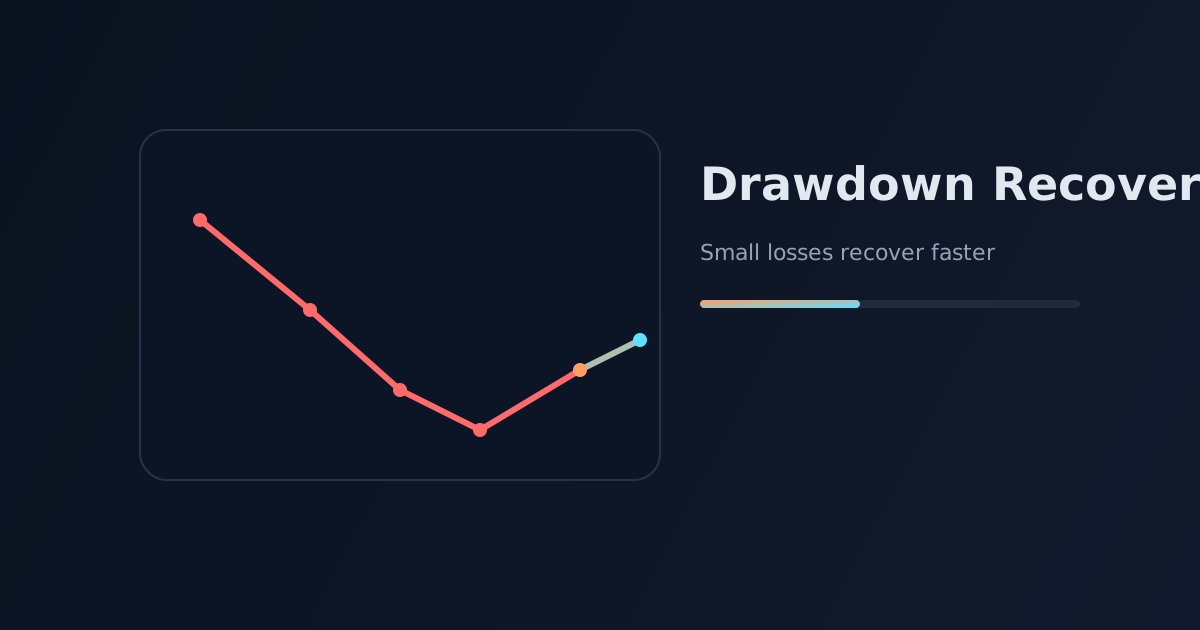
Recovery is nonlinear
If you lose 50%, you need 100% to break even. Smaller losses recover much faster:
- -10% drawdown needs +11.1% to recover
- -20% drawdown needs +25%
- -30% drawdown needs +42.9%
This is why small losses are a superpower.
What causes large drawdowns
- Risking too much per trade
- Stacking correlated positions
- Revenge trading after losses
- Widening stops without reducing size
Rules to reduce drawdowns
- Reduce risk after a drawdown threshold.
- Use a daily stop at -2R or -3R.
- Cap total open risk across positions.
- Track results in R.
The drawdown spiral
Losing money, increasing size, and trading emotionally is how accounts die. The fix is the opposite: reduce size, slow down, and focus on execution quality.